
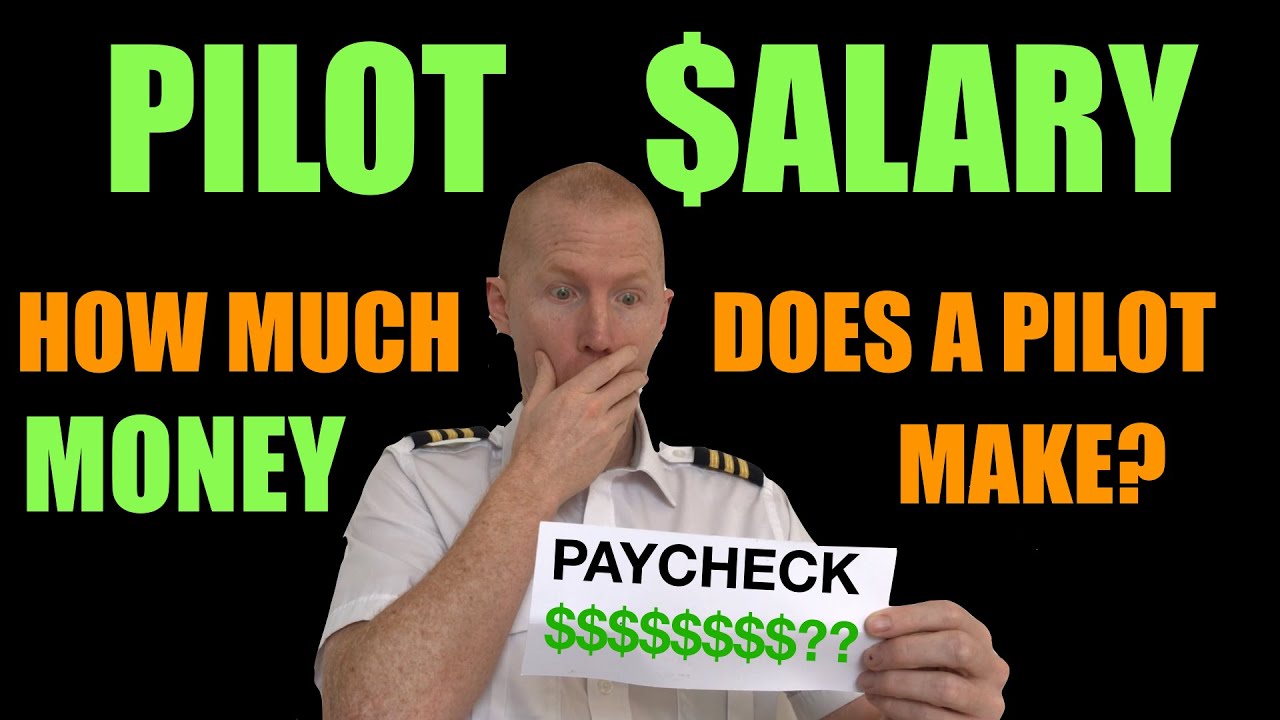
Piloting is a highly skilled and responsible profession that requires rigorous training, precision, and strong communication skills. It is often said that pilots earn a handsome salary, but the question of how much a pilot earns per month depends on many factors.
Factors determining a pilot's salary
The salary of a pilot is determined by various factors, including experience, qualifications, the type of aircraft, flight type, and location. The following sections explain each factor in detail.
Experience and Qualifications
The salary of a pilot often goes hand in hand with their experience and qualifications. Pilots with more experience tend to earn more than their less experienced peers. Similarly, highly qualified pilots with a Master's degree in Aviation or Aeronautical Engineering or those with more advanced pilot licenses such as ATPL (Airline Transport Pilot License) command a higher salary than those with a Commercial Pilot License (CPL).
Type of Aircraft
The salary of a pilot is often also influenced by the type of aircraft they fly. Pilots flying larger commercial planes such as Boeing 747 or Airbus A380 tend to make more money than those flying smaller or private planes.
Flight Type
The flight type or the nature of the flight also affects a pilot's income. Pilots who take on international or long-haul flights tend to earn more than those who fly domestic or short-haul flights.
Location
A pilot's salary also varies depending on their location. Pilots working in developed countries such as the USA, UK, or Australia tend to earn more than those working in developing countries.
How much do pilots earn?
The average monthly salary of a pilot in the USA is around $10,000 to $13,000 per month. This figure, however, is not universal and can vary significantly depending on the factors mentioned above. Pilots working for commercial airlines can earn slightly more than pilots working in general aviation or cargo operations.
In contrast, a pilot working in developing countries may earn as little as $1,500 to $2,500 per month. In such situations, the cost of living is relatively low, and pilots receive additional benefits such as housing, flights, and health insurance.
Conclusion
In conclusion, the salary of a pilot highly depends on a variety of factors such as experience, qualifications, location, type of aircraft, and flight type. Pilots can earn a substantial amount of money if they work for commercial airlines and fly large aircraft. However, they may receive a smaller paycheck if they work in general aviation or cargo operation. Aspiring pilots are advised to consider these factors before pursuing a career as a pilot.
