
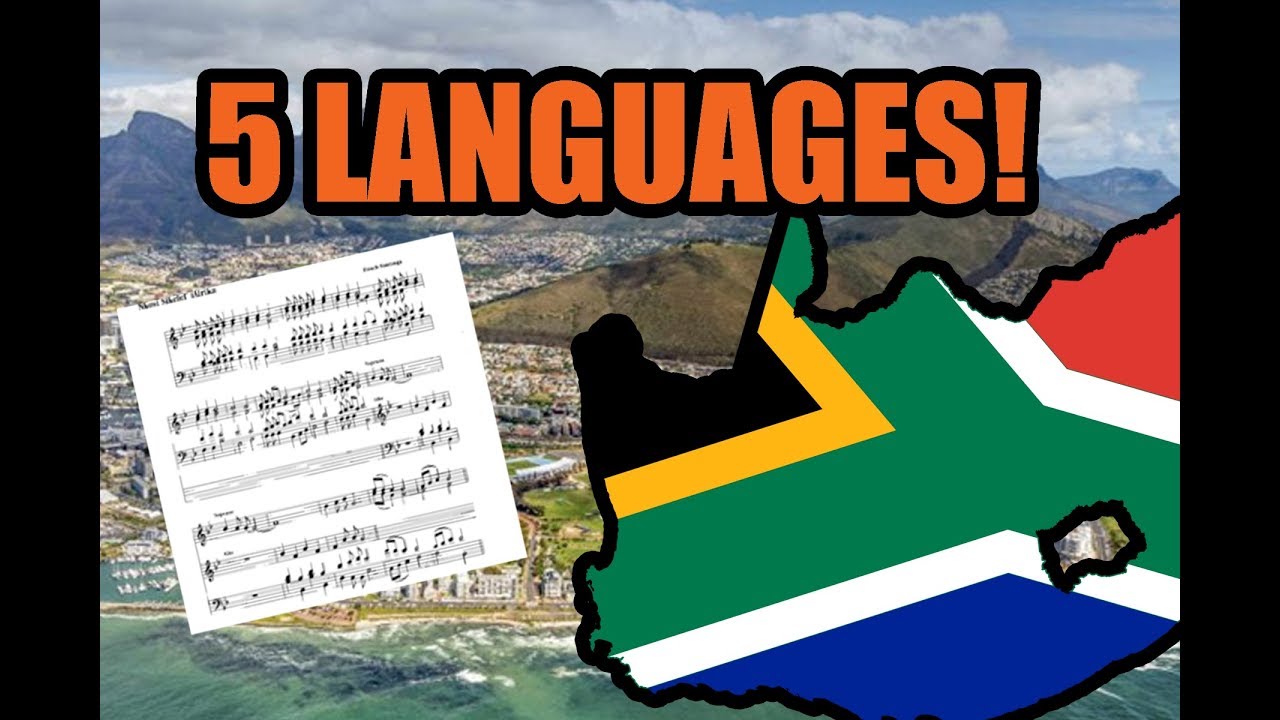
South Africa is a diverse and multi-ethnic country with a plethora of different languages spoken throughout its provinces. The country's national anthem, "Nkosi Sikelel' iAfrika" ("God Bless Africa" in English), is an iconic song that reflects the country's cultural richness and diversity. In this article, we will explore how many languages are present in the South African national anthem.
The Origins of the South African National Anthem
The South African national anthem has a complex and fascinating history. It was originally composed in 1897 by a Methodist schoolteacher named Enoch Sontonga. The song quickly became popular among black South Africans and was adopted as an anthem of the African National Congress (ANC), a political party that would later play a key role in the country's fight against apartheid.
During the apartheid era, the South African government replaced "Nkosi Sikelel' iAfrika" with two different anthems: "Die Stem van Suid-Afrika" ("The Call of South Africa"), which was the anthem of the white minority government, and "God Save the Queen", which was used for national occasions.
After the end of apartheid, a new national anthem was created that combined elements of "Nkosi Sikelel' iAfrika" and "Die Stem van Suid-Afrika". The new anthem is sung in a total of five different languages.
The Languages of the South African National Anthem
The South African national anthem is sung in five of the country's eleven official languages. These languages are:
- Xhosa: Xhosa is one of the country's most widely spoken languages and is also the native language of Nelson Mandela. The first verse of the anthem is sung in Xhosa.
- Zulu: Zulu is another of the country's most spoken languages and is one of the official languages of the country. The second verse of the anthem is sung in Zulu.
- Sesotho: Sesotho is another official language of South Africa and is spoken by around 7 million people. The third verse of the anthem is sung in Sesotho.
- Afrikaans: Afrikaans is a language that evolved from Dutch and is spoken by around 6 million people in South Africa. The fourth verse of the anthem is sung in Afrikaans.
- English: English is one of the official languages of South Africa and is spoken by around 4.9 million people. The final verse of the anthem is sung in English.
Each of the five languages used in the national anthem represents a different part of South Africa's diverse cultural heritage and history. The use of multiple languages in the anthem is a powerful symbol of the country's commitment to unity and inclusivity.
The Power of Language in South Africa
Language is a significant part of the fabric of South African culture and identity. The country's wide array of languages is a reflection of its rich and diverse cultural heritage, which includes influences from Africa, Europe, and Asia.
Throughout South Africa's history, language has been a key battleground in the fight for equality and justice. During apartheid, the white minority government sought to enforce the use of Afrikaans as the dominant language in schools and government institutions, which was met with fierce resistance by black South Africans who saw it as a symbol of oppression.
Today, South Africa is a country that celebrates its many languages and recognizes the importance of linguistic diversity. Its national anthem is just one example of how language can bring people together and promote a sense of national unity.
Conclusion
In conclusion, the South African national anthem is a powerful symbol of the country's rich and diverse cultural heritage. Sung in five different languages, it represents a commitment to unity and inclusivity that is at the heart of modern South African identity. By celebrating its many languages and cultures, South Africa has built a society that is uniquely diverse and vibrant, and that represents the best of what a country can be.
