
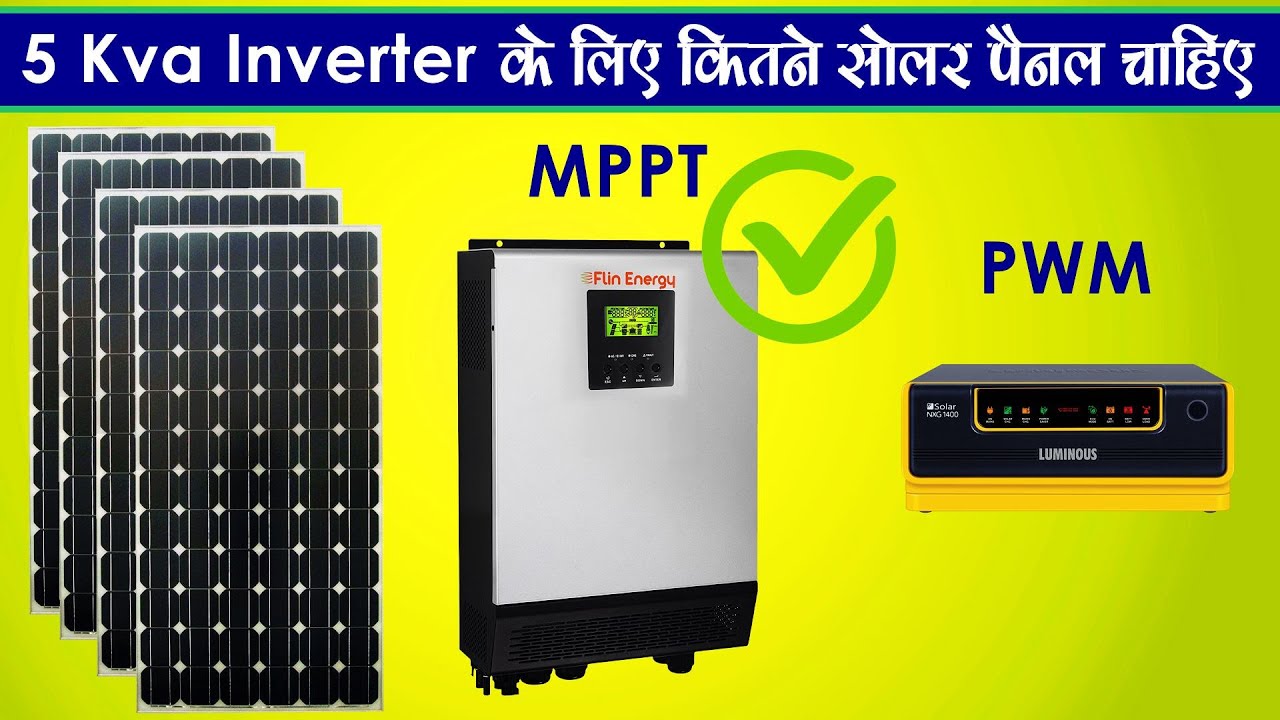
Many people are interested in using solar power to run their homes and businesses. One of the most important factors in setting up a solar power system is determining the number of solar panels required to support the desired energy load. In this article, we will discuss how many solar panels are needed for a 5kVA inverter.
Understanding a 5kVA Inverter
Before we dive into the number of solar panels needed for a 5kVA inverter, it is essential to understand what a 5kVA inverter is. A 5kVA inverter is a device that converts DC power from solar panels into AC power that can be used to power appliances and electronics.
The phrase "5kVA" stands for 5 kilo Volt-Amps. This rating is based on the inverter's maximum output capacity. It means that the inverter can handle a load of up to 5,000 watts or 5 kilowatts.
Determining the Number of Solar Panels Required
Now that we understand what a 5kVA inverter is let's determine the number of solar panels that are required to support this inverter's energy load.
The number of solar panels you require depends on two essential factors: the wattage of each solar panel and the amount of power you need to generate.
On average, a single solar panel has a wattage of 300W. To generate 5kW (5000W), you will need approximately 17 solar panels. However, this is only a rough estimate, and you will need to take into account factors like weather, efficiency of the panels, and days when the panels are not generating electricity.
Sizing Your Solar Panel Array
To calculate the number of solar panels you need with more accuracy, consider the following:
- Your energy consumption: Check your energy bills to determine how much energy you consume monthly, daily, or annually.
- Your location: The amount of sunlight varies depending on where you live. For instance, locations in the tropics experience more sunlight than areas with cloudy weather.
- The efficiency of solar panels: The efficiency of solar panels varies. Some absorb more energy than others. The efficiency of solar panels decreases when they get older, so expect performance to drop as the years go by.
- The type of solar panel: Different types of solar panels affect sizing. For example, mono-crystalline and poly-crystalline solar panels are commonly used. Mono-crystalline solar panels have higher efficiency but tend to be more expensive than the latter.
- The angle and direction of your installation: Reasonable installation angles (from 30 to 45 degrees) are recommended for optimal energy absorption.
- The environment: Some environments like coastal areas, have high humidity and saline conditions that may affect your panels. The number of hours of daylight during summer, spring, fall, and winter should be considered as well.
Conclusion
If you want to generate 5kVA (5000W) to power your home or business, you will require around 17 solar panels. However, it is recommended that you consider some of the essential factors listed above to create a more tailored setup that fits your energy needs accurately.
When setting up solar panels, remember to use high-quality components and work with a reputable installer with prior experience in solar energy systems. Do not compromise on quality as this can impact the durability and efficiency of your solar panel setup in the long run.
