
Are you planning to install tiles, carpet or hardwood flooring in your home or office? Then, you must first lay a smooth, leveled surface. This is where screeding comes in.
What is Screed?
Screed is a thin layer of cement-based material that is used to level off the surface of a concrete or subfloor. It can be used to create a smooth, flat surface, ready for the installation of tiles, carpet, or other types of floor covering.
Types of Screed
There are several types of screed available, but the most common ones are:
Traditional Screed:
It is a sand and cement mixture that is laid on top of the concrete subfloor. It is ideal for small areas and can be used in both residential and commercial buildings.
Anhydrite Screed:
This type of screed is made from anhydrite, a form of calcium sulfate. It is quick-drying and can be laid in large areas. However, it is not suitable for areas that will be exposed to moisture.
Self-Levelling Screed:
As the name suggests, this type of screed is self-leveling, which means that it doesn't require much manual labor. It is perfect for large areas and can be completed quickly.
How to Screed a Floor?
Screeding a floor is a skill that requires experience and attention to detail. However, if you follow the below-mentioned steps, you can screed a floor like a professional:
Step 1: Prepare the Subfloor
The first step is to clean the concrete subfloor thoroughly. Remove any debris, dust, or loose materials that may be present. Ensure that the subfloor is dry and free of any moisture.
Step 2: Mix the Screed
Mix the screed according to the manufacturer's instructions. Use a trowel or mixer to combine the screed mixture to a uniform consistency.
Step 3: Apply the Screed
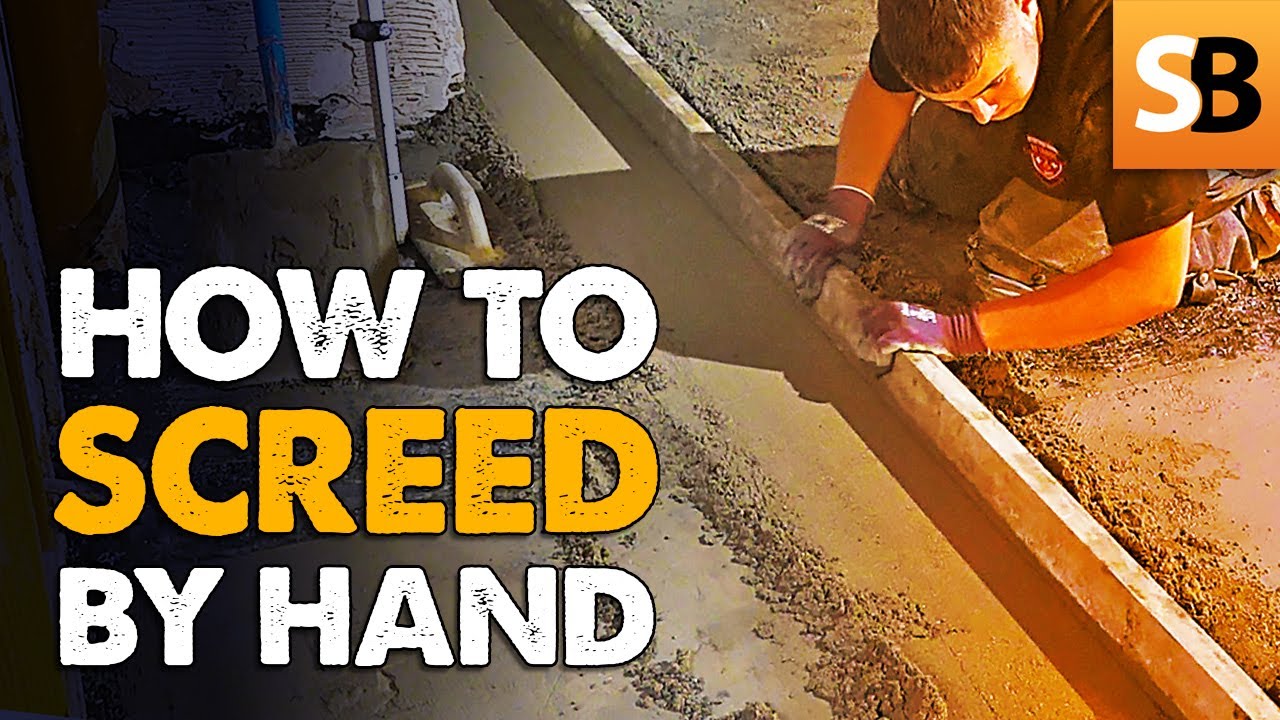
Start by applying the screed to one corner of the room. Use a straight edge to spread the screed evenly across the floor. Repeat the process until the entire floor is covered.
Step 4: Smooth the Screed
Use a float or trowel to smooth the screed, ensuring that it is level and flat. Pay special attention to areas that may be slightly higher or lower than the rest.
Step 5: Allow the Screed to Dry
Leave the screeded floor to dry for at least 24 hours. During this time, avoid walking on the floor or placing any heavy objects on it.
Conclusion
Screeding a floor is an essential part of any floor installation project. It is important to choose the right type of screed and to follow the correct procedures. With the above-mentioned steps and some careful attention, you can screed a floor like a professional.
